Which cattle are actually Kuroge Wagyu?
“Wagyu” does not mean any beef raised in Japan. The name belongs to four breeds, and one of them accounts for nearly all of it.
WAGYU ZINE editors1 min read
Four breeds, and only four
In Japan the word wagyu is reserved for four breeds: Japanese Black (Kuroge Washu), Japanese Brown (Akage Washu), Japanese Shorthorn and Japanese Polled, plus crosses between those four. A Holstein born and raised in Japan is “domestic beef” (kokusan-gyu), not wagyu.
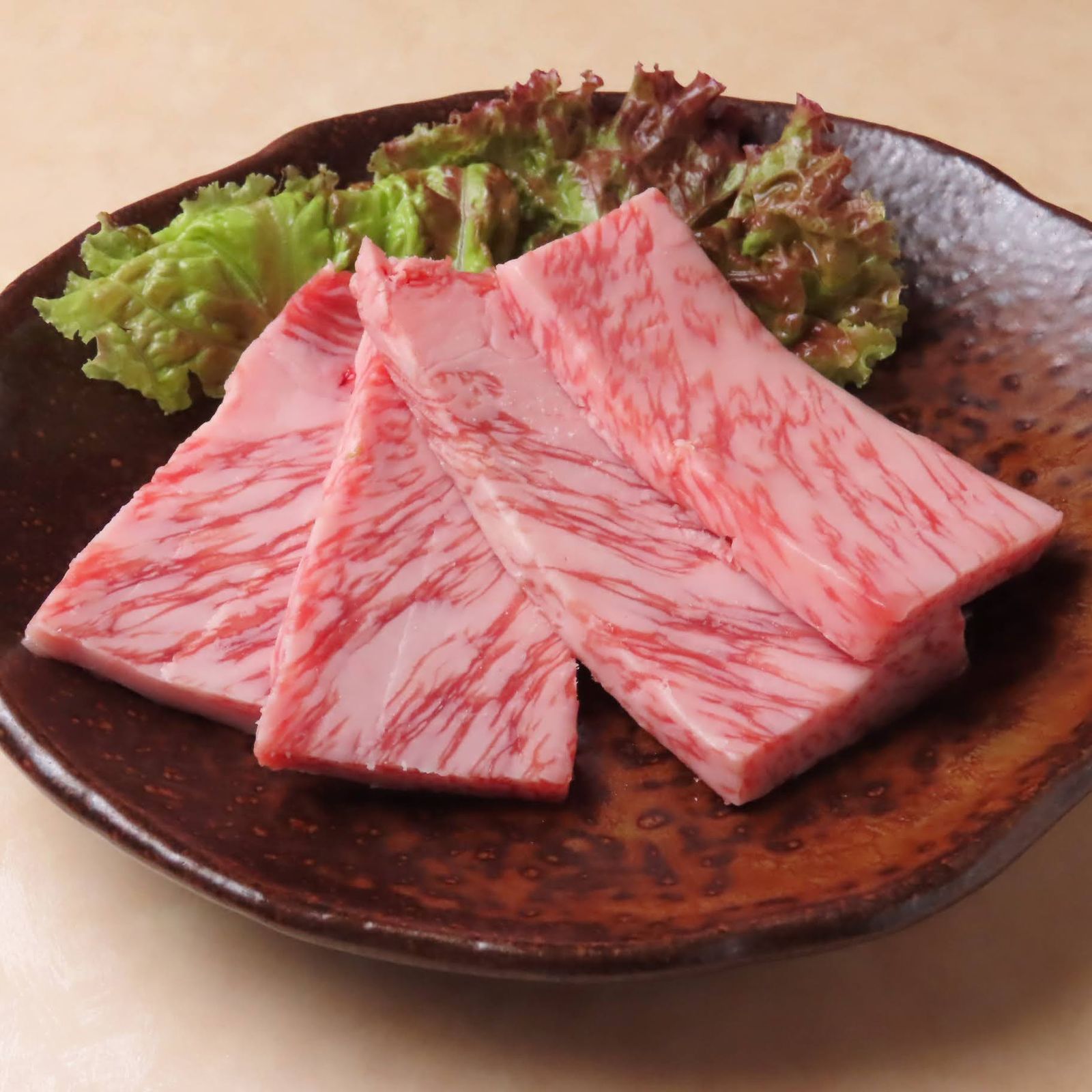
Japanese Black makes up about 98 percent of the herd. The finely marbled beef most people picture when they hear “wagyu” is almost always this breed. In this zine we call it Kuroge Wagyu.
Why it marbles so heavily
Japanese Black cattle are genetically inclined to store fat between their muscle fibres. They were draught animals for most of their history; serious breeding for beef only began in the twentieth century, and bloodlines that marbled well were selected again and again.
One name keeps coming up in that history: Tajiri, a bull born in 1939 in Mikata, Hyogo Prefecture. According to a survey by the Wagyu Registry Association, 99.9 percent of Japan’s Japanese Black breeding cows descend from him.
From birth to beef
Most Kuroge Wagyu pass through two farms. Breeding farmers raise calves and sell them at auction at around nine months; fattening farmers then keep them for roughly another twenty. Cattle go to market at about 30 months. Pigs take around six months and broiler chickens about fifty days, which gives a sense of how much time goes into each animal.
The famous regional brands, such as Kobe, Matsusaka, Omi and Kagawa’s Sanuki, are nearly all the same breed. What separates them is bloodline, feed, water, the skill of the farmer and each brand’s own standards.
What is in this issue
How to read a grade, Sanuki olive beef from Kagawa, the temperature at which wagyu fat melts, how to grill a slice, and the ten-digit number that follows every animal. Read in any order.