Tongue
タン
The tongue: one per animal. The base is fatty and tender; it gets firmer toward the tip.
How to cook itSear thick slices on both sides, thin ones briefly. Salt and lemon.
01Issue 01
Winter 2026
Published by Takamatsu Bunpachi, Kagawa, Japan
Issue 01
Winter 2026
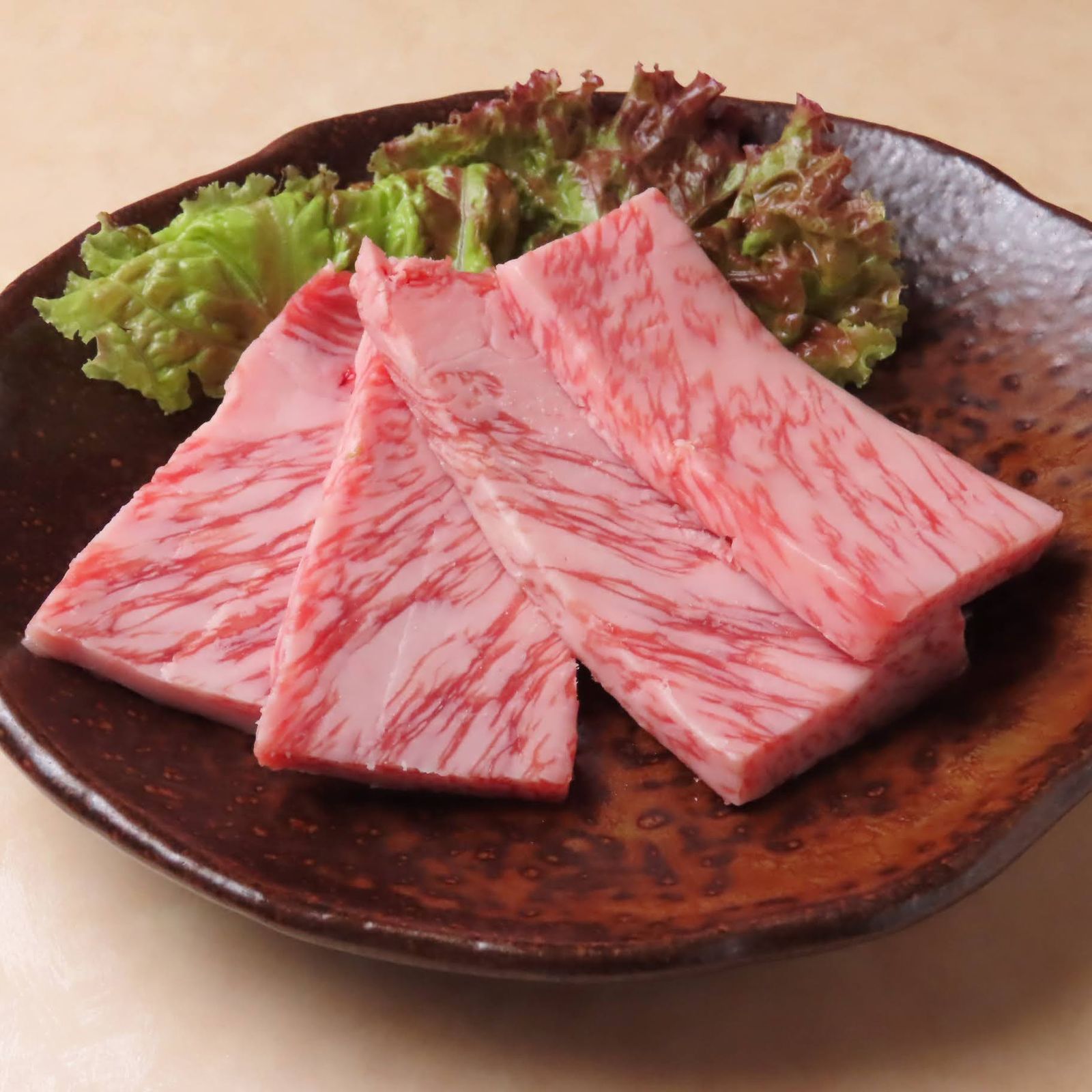 Which cattle are actually Kuroge Wagyu?“Wagyu” does not mean any beef raised in Japan. The name belongs to four breeds, and one of them accounts for nearly all of it.
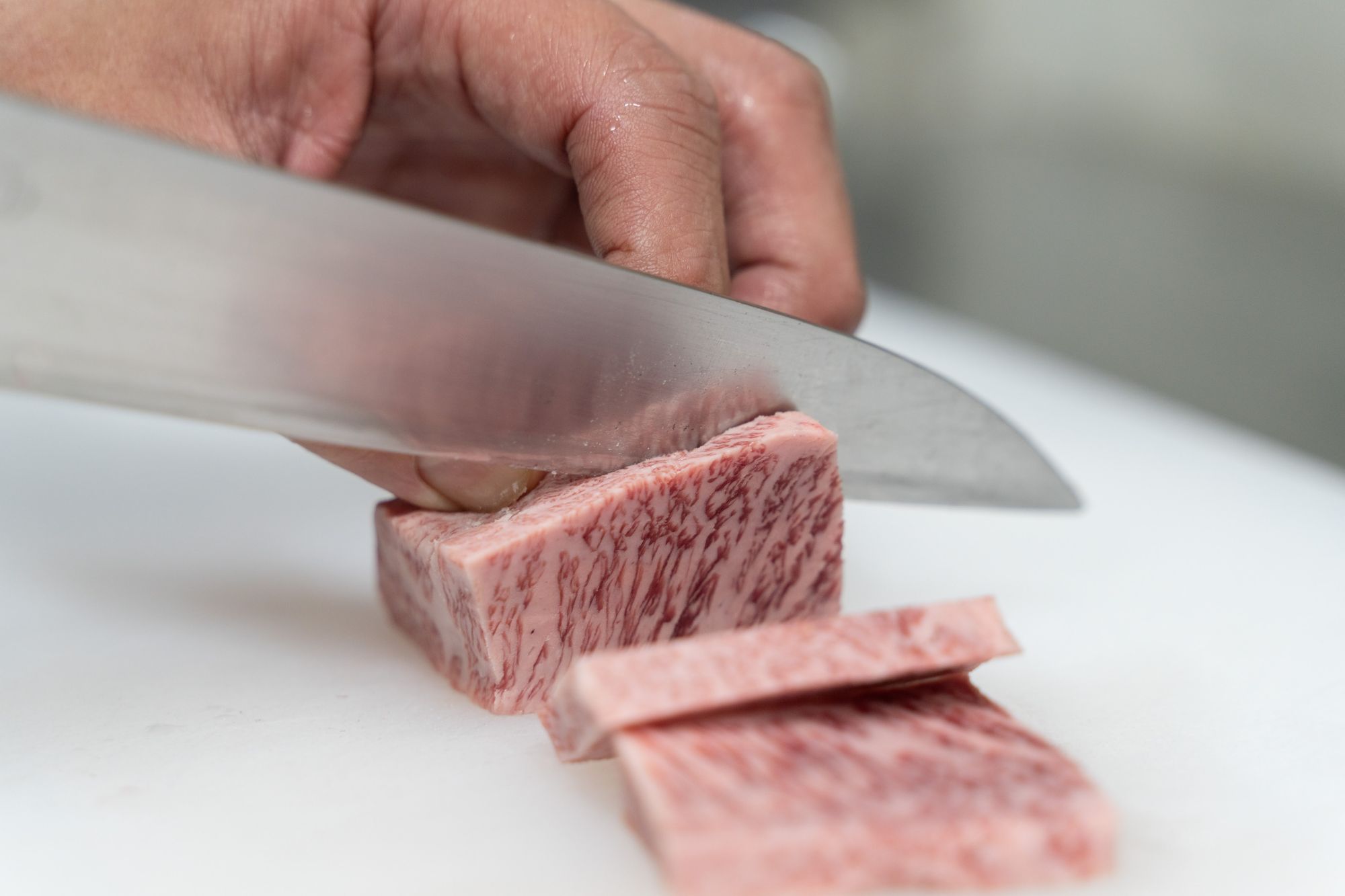 A5 is not a score for flavourThe letter and the number measure different things. Once you can read a grade properly, you choose beef differently.
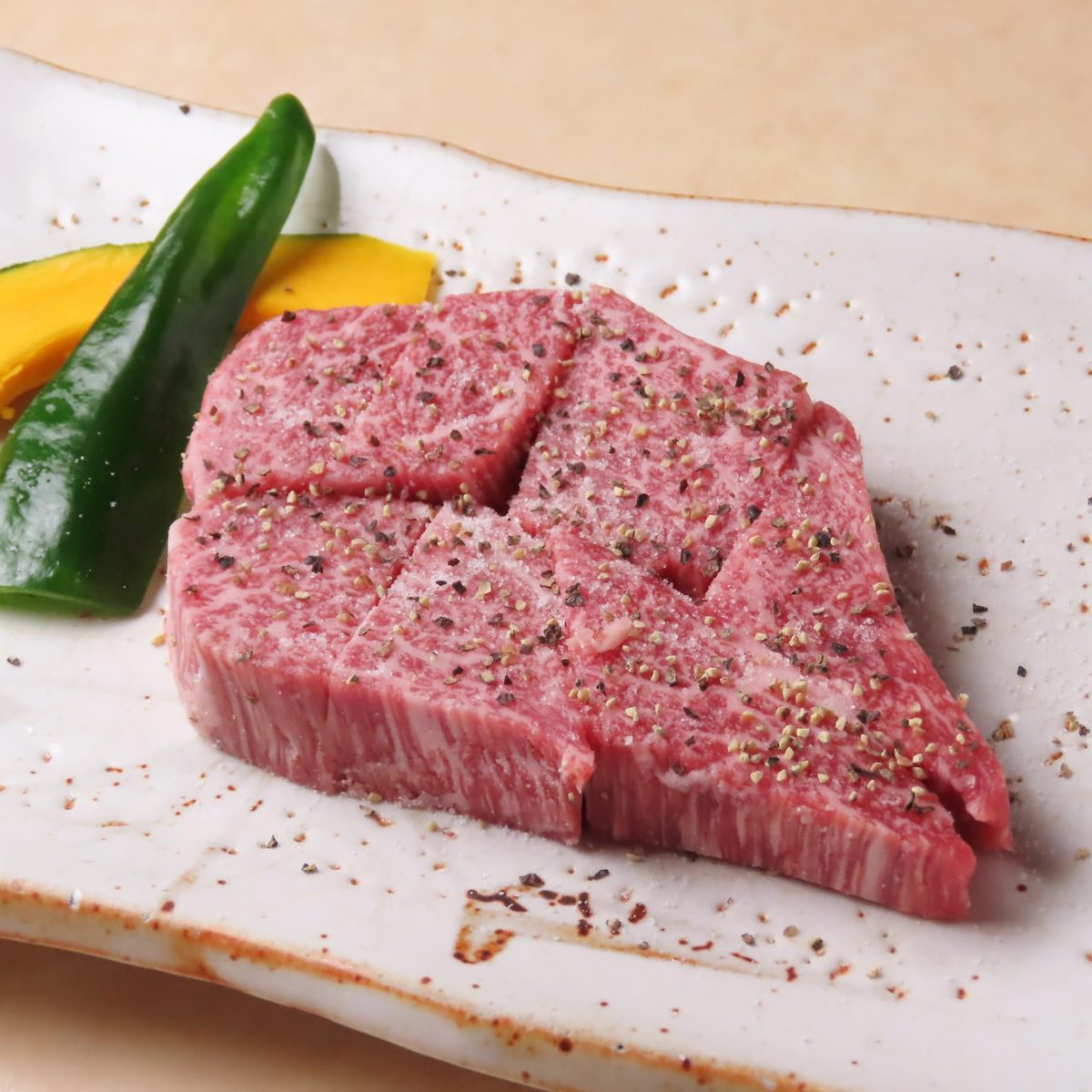 The cattle that eat olivesOlives pressed on an island in the Seto Inland Sea become cattle feed. Sanuki olive beef is a story of a place feeding its own herd.
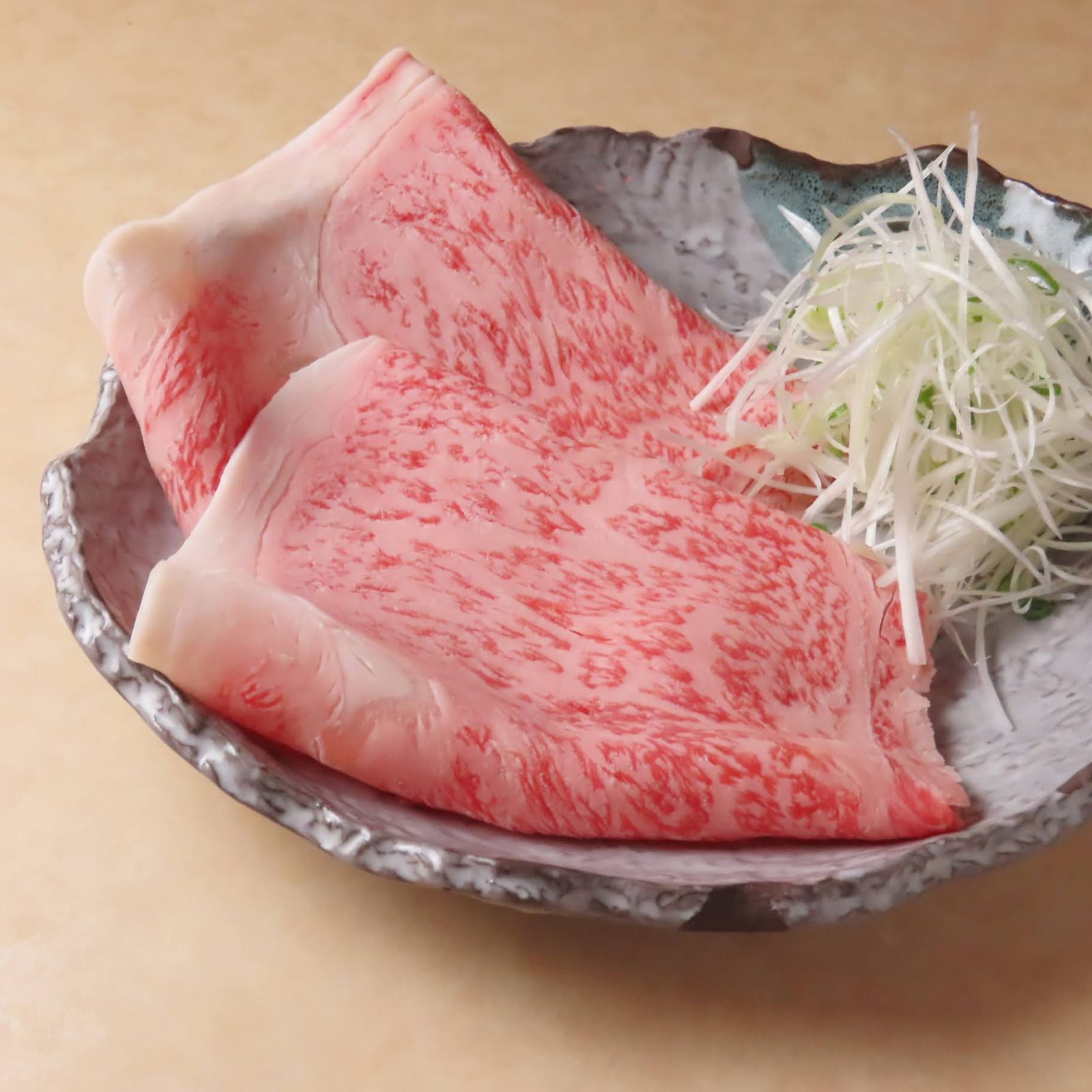 The temperature at which the fat melts“Melts in your mouth” is not a figure of speech with Kuroge Wagyu. It comes down to what the fat is made of, and how warm you are.
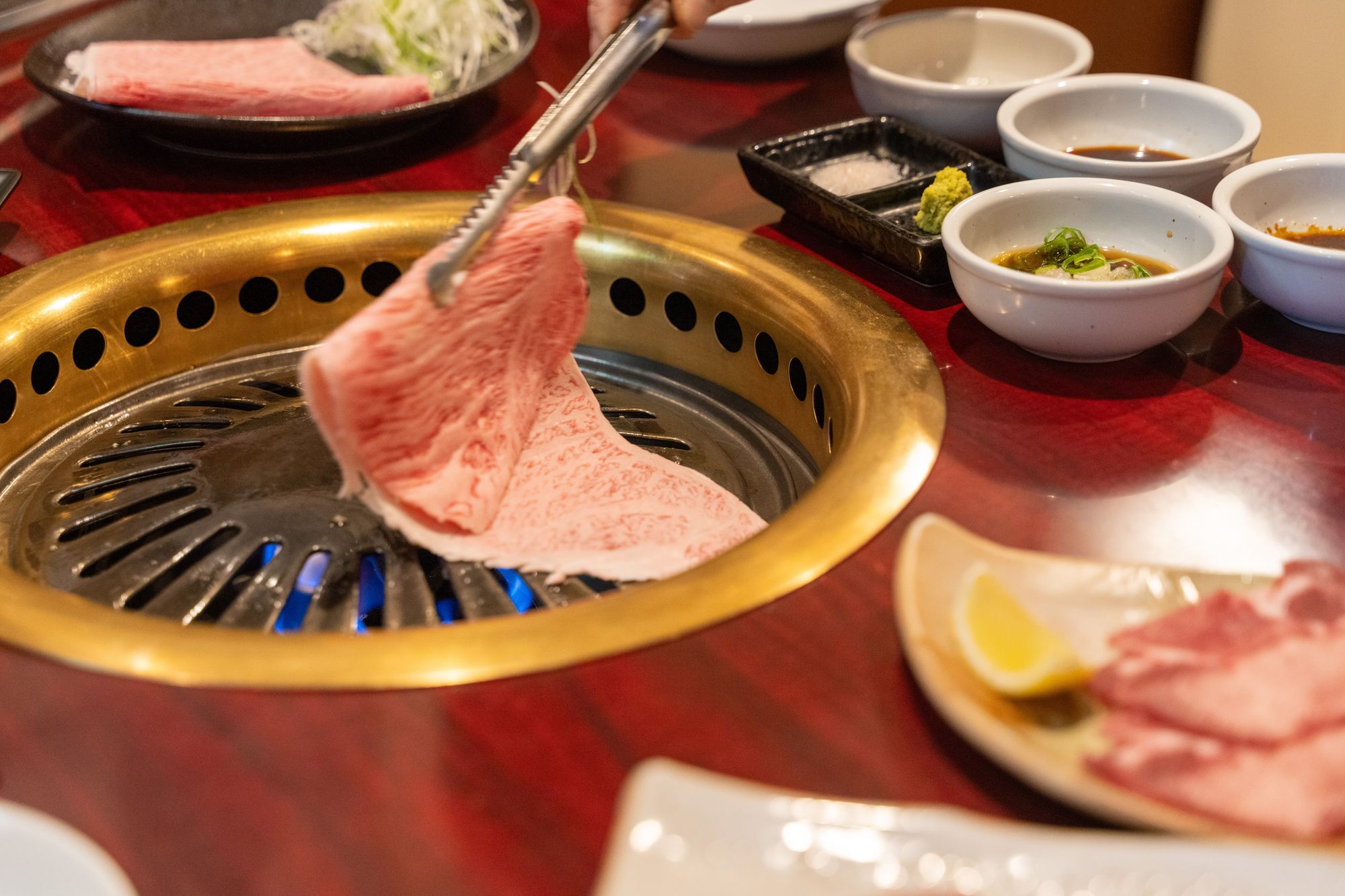 How to grill one sliceYakiniku is a meal where the guest does the last step of the cooking. It is not hard. Four habits make the same meat taste much better.
 Follow the ten-digit numberEvery head of cattle in Japan has its own number. Look up the ten digits you see at a restaurant and you can find out when and where that animal was born.
Marbling is not a surface pattern. It runs right through the meat, so every cut face shows the same flow.
Marbling is judged on the twelve-step Beef Marbling Standard. Drag the slider from No. 1 to No. 12 to see the range.
Marbling grade5
This model illustrates the idea. It is not the official reference used by graders.
Where does kalbi come from? Why is misuji rare?
Read about all thirteen cuts
Pick a cut. Drag sideways to turn the model.
タン
The tongue: one per animal. The base is fatty and tender; it gets firmer toward the tip.
How to cook itSear thick slices on both sides, thin ones briefly. Salt and lemon.
ネック
A hard-working muscle with plenty of sinew and a deep, beefy flavour.
How to cook itBraised or minced. For the grill, sliced thin.
肩ロース
A large cut from shoulder to back, with lean and fat well balanced. The chuck flap inside it, called zabuton, is especially finely marbled.
How to cook itThin slices seared for a moment, or sukiyaki.
リブロース
The centre of the back and the most heavily marbled cut. Graders judge marbling on this cross-section, between the 6th and 7th ribs.
How to cook itDo not overcook. Eat when the fat turns translucent.
サーロイン
The back muscle behind the rib roast. Fine-grained and even in shape, the classic steak cut.
How to cook itCut thick, sear hard, then let it rest.
ヒレ
A long, narrow muscle tucked inside the loin. It barely moves, so it is the most tender cut, and there is very little of it.
How to cook itLean, so keep it rare to medium rare.
ランプ
Lean meat from hip to rump, tender and full-flavoured. The cap at the end, called ichibo, carries sweet fat and is a yakiniku favourite.
How to cook itMedium heat, unhurried. Good with tare or salt.
もも
The big lean muscles of the hind leg: top round, bottom round and knuckle. The heart of the knuckle, shinshin, is fine and delicate.
How to cook itWith so little fat it toughens fast. Cook briefly.
肩(うで)
The top of the foreleg: lean and flavourful. Hidden under the shoulder blade is misuji, a rare, finely marbled cut with only a little per animal.
How to cook itMisuji needs only a quick sear on one side.
肩バラ
The chest: layers of lean and fat that give more flavour the longer you chew. Often served as kalbi.
How to cook itGrill until browned, letting the fat drip. Made for tare.
ともバラ
The belly around the ribs, and the heart of what yakiniku calls kalbi. The sweetest, most aromatic fat on the animal.
How to cook itHigh heat to crisp the fat. Eat with rice.
ハラミ
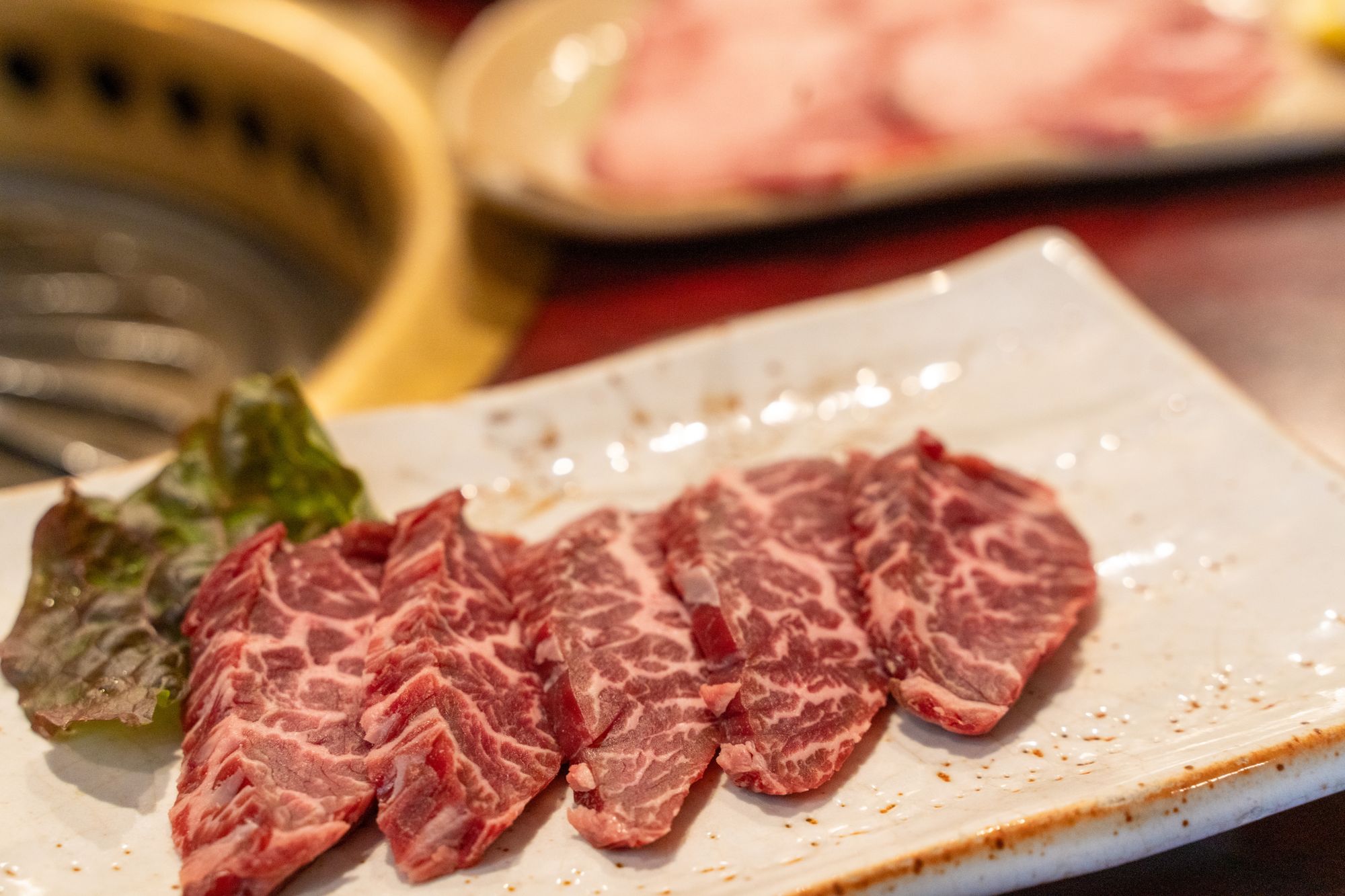
The diaphragm. It looks like lean meat but is classed as offal in Japan. Soft and very juicy.
How to cook itThick-cut. Sear the outside, keep the inside moist.
すね
Leg meat: tough and sinewy until a long simmer melts its gelatin.
How to cook itStews and soups. Not one for the grill.